
Key Takeaways
- The best spray gun light improves defect detection by providing even, glare-free illumination rather than just high brightness.
- Clip-on lights work best for precision and tight areas, while external lights provide stronger overall coverage.
- High CRI lighting is critical for accurate color matching, especially with metallic and clear coat finishes.
- Most users get the best results by combining a gun-mounted light with a secondary external light source.
- For consistent results, prioritize beam quality, mounting stability, and battery reliability over raw lumen output.
Types of Paint Gun Lights
Clip-On Spray Gun Lights
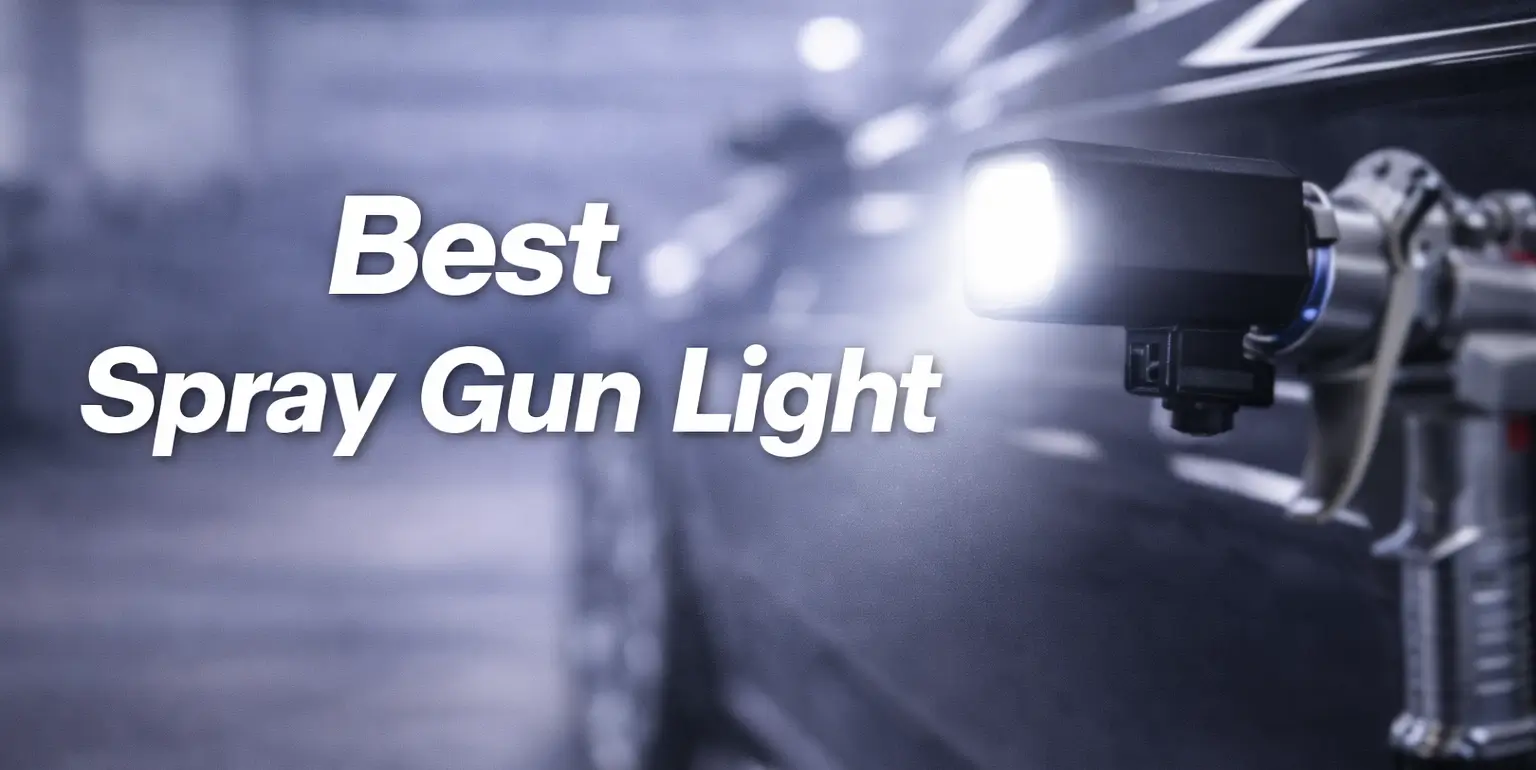
Clip-on spray gun lights attach directly to the spray gun, usually around the air cap or body. Their main advantage is consistency. Because the light moves with the gun, it illuminates exactly where the paint is being applied. This reduces shadows and helps identify issues like uneven coverage or early-stage runs before they become visible later.
The limitation is balance and compatibility. Some models add noticeable weight to the front of the gun, which can affect control during longer sessions. Others may not fit all spray guns properly. Lower-quality versions often produce uneven light patterns that distort how the surface looks. When well-designed, these lights are highly effective for detail work and confined areas.
Magnetic / External Work Lights
External work lights are positioned near the work area using magnetic bases or stands. They provide stronger and wider illumination than most clip-on options, making them suitable for larger panels or full vehicle sections.
The trade-off is that they do not move with the spray pattern. This means shadows can appear depending on positioning, especially on curved surfaces. Proper placement becomes critical. These lights are often more powerful and durable, but they require more setup and adjustment during use. They work best as a primary light source supplemented by a more focused light.
Integrated Spray Gun Lighting Systems
Integrated lighting systems are designed specifically for spray guns and are often used in professional environments. They offer the most seamless experience because they are built to avoid balance issues and airflow interference.
Their main advantage is consistency and ergonomics. The light is positioned exactly where it needs to be without additional mounting adjustments. However, they are less flexible and typically more expensive. They are best suited for users who require repeatable, high-precision results and already have a dedicated setup.
Best Spray Gun Light – The selection
Scangrip SUNMATCH 4
A professional-grade inspection light designed for accurate color evaluation and surface inspection. It is widely used in detailing and paint correction where color precision matters.
Best for: High-accuracy color matching and defect detection
Key Specs:
- High CRI LED
- Adjustable brightness levels
- Rechargeable battery
- Compact handheld design
Pros | Cons |
Excellent color accuracy | Not hands-free |
Even controlled light output | Higher cost |
Reliable for professional use | Requires repositioning |
Verdict:
This is the strongest option for identifying subtle paint differences and surface defects. It is not mounted to the gun, but it provides a level of accuracy that clip-on lights cannot match.
Astro Pneumatic Tool 50SL
A dedicated spray gun-mounted light that provides direct illumination aligned with the spray pattern.
Best for: Real-time visibility while spraying
Key Specs:
- Spray gun mounting system
- LED ring design
- Lightweight construction
- Battery powered
Pros | Cons |
Moves with spray direction | Limited overall brightness |
Improves visibility in tight areas | Fit may vary by gun |
Simple and practical setup | Battery life is moderate |
Verdict:
A practical upgrade for anyone who wants better visibility without changing their workflow. It works best when paired with an external light.
Scangrip MINIMATCH
A compact inspection light with high color accuracy in a small form factor.
Best for: Portable inspection and spot checks
Key Specs:
- High CRI LED
- Pocket-sized design
- Rechargeable battery
- Multiple brightness settings
|
Pros |
Cons |
|
Very portable |
Small coverage area |
|
Accurate color rendering |
Not hands-free |
|
Consistent performance |
Not suitable as primary light |
Verdict:
Useful as a secondary tool for checking work rather than lighting the entire process. It fills gaps that larger lights miss.
NEIKO 40447A Cordless LED Work Light
A general-purpose work light with strong output and flexible positioning.
Best for: Budget-friendly wide-area lighting
Key Specs:
- High lumen output
- Magnetic base
- Rechargeable battery
- Wide beam angle
|
Pros |
Cons |
|
Strong brightness for large areas |
Lower color accuracy |
|
Affordable and accessible |
Bulky design |
|
Versatile placement options |
Not spray-specific |
Verdict:
A solid choice for general lighting, especially for larger surfaces. It lacks precision but provides good overall visibility.
Milwaukee M12 LED Work Light
A durable, job-site-focused light designed for consistent performance in demanding environments.
Best for: Long-term durability and reliability
Key Specs:
- M12 battery platform
- Adjustable head
- Rugged construction
- Consistent light output
|
Pros |
Cons |
|
Highly durable |
Heavier than alternatives |
|
Long runtime |
Requires compatible batteries |
|
Stable brightness over time |
Not optimized for paint accuracy |
Verdict:
Best suited for users who prioritize reliability over precision. Works well as a primary light in tougher environments.
GearWrench 83151 Rechargeable Work Light
A balanced option that combines portability with decent brightness and flexibility.
Best for: General-purpose mid-range use
Key Specs:
- Rechargeable LED
- Foldable design
- Magnetic base
- Medium-high brightness
|
Pros |
Cons |
|
Good balance of size and power |
Average color accuracy |
|
Flexible positioning |
Not spray-specific |
|
Easy to store and transport |
Limited fine-detail visibility |
Verdict:
A practical middle-ground solution that works well for general painting tasks without requiring a complex setup.
Aain AALED Spray Gun Light Kit
A clip-on spray gun light designed to provide direct illumination with adjustable mounting.
Best for: Flexible spray gun setups
Key Specs:
- Clip-on mounting system
- LED ring design
- Rechargeable battery
- Adjustable positioning
|
Pros |
Cons |
|
Direct illumination at the spray point |
Build quality varies |
|
Improves consistency during spraying |
Less established brand |
|
Lightweight design |
Limited long-term data |
Verdict:
A versatile alternative to more established options. It works well for users who want gun-mounted lighting without investing in premium systems.
Lights for Spray Guns – Comparison
|
Product |
Key Specs |
Best For |
|
Scangrip SUNMATCH 4 |
High CRI, adjustable brightness |
Professional accuracy |
|
Astro Pneumatic 50SL |
Gun-mounted LED ring |
Direct spray lighting |
|
Scangrip MINIMATCH |
Compact, high CRI |
Portable inspection |
|
NEIKO 40447A |
High lumen, magnetic |
Budget lighting |
|
Milwaukee M12 |
Durable, battery system |
Heavy-duty use |
|
GearWrench 83151 |
Rechargeable, foldable |
Mid-range users |
|
Aain AALED Kit |
Clip-on LED |
Versatile setups |
Buying Guide
Brightness vs Usable Light
Brightness alone does not determine how well you can see the surface. Lights with high output but narrow beams tend to create glare, especially on clear coat. This glare hides surface texture and makes it harder to identify defects. A more diffused and even beam reveals inconsistencies in coverage and texture more effectively. The goal is not maximum brightness but controlled visibility.
Color Accuracy (CRI)
Color rendering directly affects how paint appears during application. Low CRI lighting can make colors look correct during spraying, but different after drying. This is especially noticeable with metallic paints and blends. High CRI lighting reveals subtle tone differences and helps ensure consistency across panels. For automotive work, this is one of the most important factors.
Mounting and Ergonomics
Lighting should not interfere with spray control. Clip-on lights can improve precision but may affect balance if they are too heavy or poorly positioned. External lights avoid this issue but require repositioning as you move around the surface. The choice depends on whether you prioritize mobility or stability in your setup.
Battery Performance
Battery behavior matters more than advertised runtime. Some lights start bright but quickly lose intensity, affecting the visibility mid-job. Consistent output is more important than maximum runtime. Recharge speed and battery system compatibility also influence workflow efficiency.
Durability in Painting Environments
Painting exposes equipment to overspray, solvents, and accidental drops. Lights with weak housings or poor sealing tend to fail quickly. Durable construction ensures consistent performance over time and reduces interruptions during work.
How to Choose (by Use Case)
Beginner Setup
A single external work light is usually the best starting point. It provides enough coverage without complicating the setup. Positioning becomes the key factor in achieving good visibility.
Intermediate Users
Combining an external light with a clip-on spray gun light improves both coverage and precision. This setup reduces blind spots and helps identify issues earlier.
Advanced / Professional
High CRI lighting and consistent illumination are essential. At this level, accuracy and repeatability matter more than cost. Multiple light sources are often used to eliminate shadows.
Common Applications
Automotive Panel Painting
Even lighting is required to detect surface inconsistencies across large panels. Uneven light distribution can hide defects until after curing.
Clear Coat Application
Reflections from strong lights can create a false sense of smoothness. Controlled, diffused lighting provides a more accurate view of the surface.
Metallic Paints
Lighting angle influences how metallic flakes appear. Inconsistent lighting can result in uneven visual texture across panels.
Small Detail Work
Focused lighting is necessary to eliminate shadows in tight areas. Without it, small imperfections are easy to miss.
Common Mistakes
Choosing Based Only on Brightness
Many users assume higher brightness automatically improves visibility. In reality, overly intense light creates reflections that hide defects. A balanced beam is more effective.
Ignoring Color Accuracy
Low CRI lighting leads to incorrect color perception during spraying. This often results in mismatched panels after the paint dries.
Poor Light Positioning
Even high-quality lights fail when positioned incorrectly. Shadows and reflections can distort how the surface appears.
Overloading the Spray Gun
Adding heavy or poorly mounted lights affects control and consistency. This can lead to uneven paint application.
Using Only One Light Source
A single light creates blind spots. Multiple angles improve visibility and reduce missed defects.
Final Words
Choosing the best spray gun light depends on how you balance precision, coverage, and workflow. No single solution fits every situation. Most users benefit from combining different types of lighting to cover both detailed work and larger surfaces. The key is understanding how light interacts with paint rather than focusing only on specifications.
FAQ
What is the best spray gun light?
The best option depends on your setup. Clip-on lights provide precision, while external lights offer better coverage. Many users combine both for better results.
Do I need high CRI lighting?
Yes, especially for automotive or color-sensitive work. It ensures that what you see during spraying matches the final result.
Are spray gun lights worth it?
They help identify issues early, which reduces rework and improves final quality.
Can I use a regular work light?
Yes, but it may not provide accurate color representation or consistent visibility for detailed work.
How many lights should I use?
Using more than one light improves visibility from different angles and reduces shadows.