
Key Takeaways
- Most clear coat problems fall into two categories: aging damage and repaint defects
- Oxidation and light hazing can often be corrected, but peeling and cracking require repaint
- If the surface is physically failing, polishing will not fix it
- Clear coat failure becomes irreversible once the layer is compromised
- Early identification determines whether you can fix or must repaint
If you are dealing with clear coat problems, you’re most likely trying to figure out one thing: is this fixable, or is repainting unavoidable?
The difficulty is that different types of clear coat failure can look similar at first. A dull surface might only need polishing, or it might already be breaking down. Peeling in one case might be from age, and in another from a bad repaint job.
This guide will help you identify what you are actually seeing, understand why it happens, and make the right decision before wasting time or damaging the paint further.
Clear Coat Problems
Aging & Environmental Clear Coat Failures
These problems develop slowly over time. They are usually caused by UV exposure, weather, and lack of protection. Most factory paint failures fall into this category. If you are having trouble understanding a term mentioned below, check out the glossary page.
Peeling / Delamination / Flaking
What it is
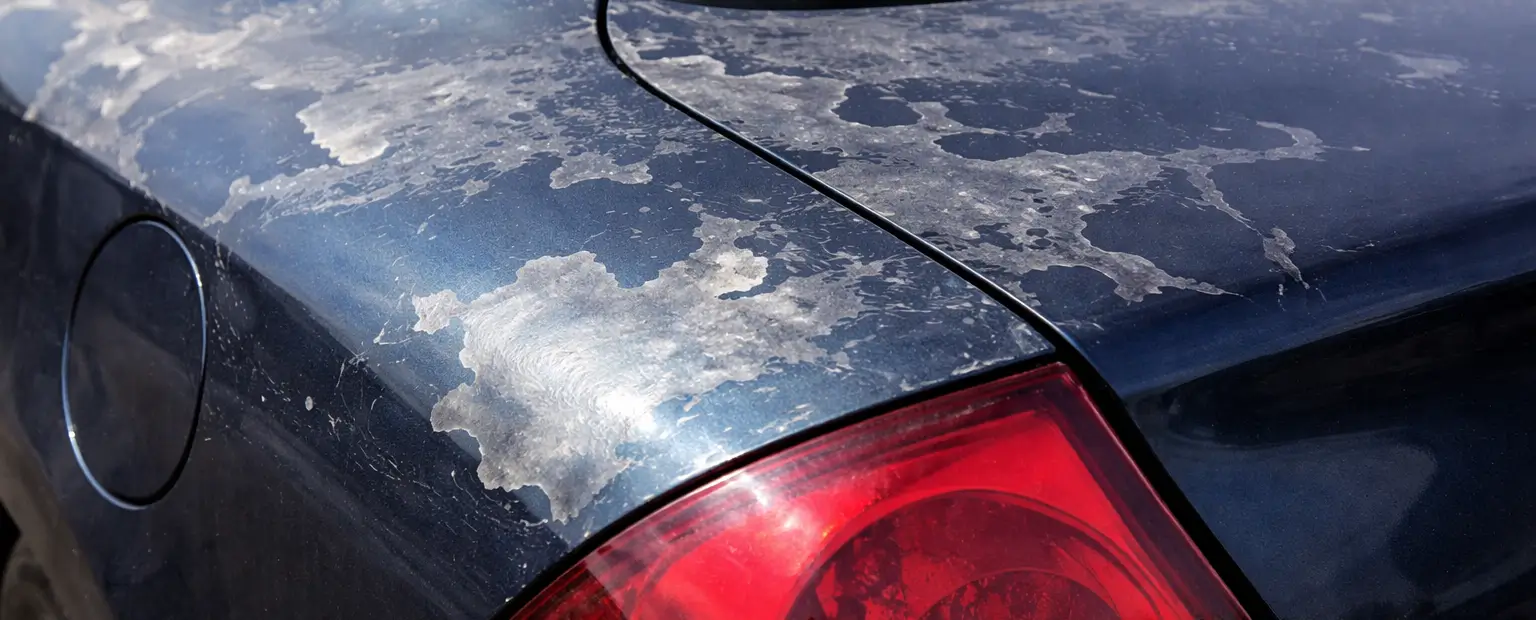
This is a structural failure where the clear coat separates from the base coat. Instead of sitting as a solid protective layer, it begins to lift and detach, often exposing the color underneath. At this stage, the paint system has already failed.
How to Recognize It
Peeling usually starts on horizontal panels like the hood or roof. You will see edges where the clear coat has lifted, and in more advanced cases, entire sections will flake off. The base color becomes visible, and the surface looks uneven and damaged rather than simply dull.
Why Does It Happen
Long-term UV exposure breaks down the bond between layers. Over time, the clear coat loses flexibility and adhesion. In some cases, poor original paint application or low-quality resprays accelerate this process.
What You Can Do About It
There is no true repair once peeling starts. The only reliable solution is repainting the affected panel. Temporary measures may slow visual deterioration slightly, but they do not restore the structure.
What You Shouldn’t Do
Polishing or compounding will worsen the issue by removing the surrounding material. DIY clear coat sprays rarely bond correctly and often make the surface uneven. Sanding without planning a repaint will only expose more damage.
Fixability
Requires repaint.
Oxidation / Fading / Chalkiness
What it is
Oxidation occurs when UV exposure breaks down the outer layer of the clear coat. The surface loses its transparency and begins to look dull, faded, or chalky.
How to Recognize It
The paint appears lifeless, with reduced depth and shine. In more advanced stages, a chalky residue may appear when you wipe the surface. Unlike peeling, the clear coat remains present but degraded.
Why Does It Happen
Constant sun exposure without protection is the main cause. Over time, the protective properties of the clear coat weaken, especially if the surface is never sealed or maintained.
What You Can Do About It
If the clear coat is still intact, polishing or compounding can restore clarity by removing the oxidized layer. Protection must be applied immediately afterward to prevent rapid recurrence. Severe oxidation may require more aggressive correction or repaint.
What You Shouldn’t Do
Ignoring early oxidation allows it to progress into irreversible damage. Over-polishing without understanding the clear coat thickness can remove too much material. Harsh chemicals can accelerate breakdown.
Fixability
Often fixable if addressed early.
Cloudiness / Hazing / Milky Finish
What it is
This appears as a loss of clarity in the clear coat, often giving it a cloudy or milky look. Unlike oxidation, which dulls the surface, this reduces transparency.
How to Recognize It
The paint looks hazy even after washing. Reflections are blurred rather than sharp. The effect is especially visible under direct sunlight.
Why Does It Happen
Moisture intrusion, chemical exposure, or early-stage degradation can all cause hazing. In some cases, it develops after improper washing or environmental contamination.
What You Can Do About It
Light hazing can often be corrected through polishing. If the issue is deeper within the clear coat, correction becomes less effective, and repainting may be required.
What You Shouldn’t Do
Assuming it is just surface dirt leads to repeated ineffective cleaning. Continuing to polish without improvement risks removing usable clear coat.
Fixability
Depends on the depth of damage.
Cracking / Crazing / Micro-Fractures
What it is
This is a structural breakdown where the clear coat develops fine cracks across the surface. It indicates that the material has lost flexibility and integrity.
How to Recognize It
You will see small lines forming a spiderweb-like pattern. These cracks spread over time and are visible under direct light.
Why Does It Happen
Aging, UV exposure, and repeated temperature changes cause the clear coat to become brittle. Once flexibility is lost, cracking follows.
What You Can Do About It
There is no effective repair. Repainting is required to restore the surface.
What You Shouldn’t Do
Polishing does not remove cracks. Applying coatings or sealants will not fix structural damage. Sanding without paint preparation can worsen the appearance.
Fixability
Requires repaint.
Loss of Gloss / Dull Finish / Matte Appearance
What it is
This is an early-stage issue where the clear coat loses reflectivity but is still structurally intact.
How to Recognize It
The surface appears flat and lacks shine, even when clean. Reflections are weak but not distorted.
Why Does It Happen
Light oxidation, minor surface wear, or contamination reduces gloss over time.
What You Can Do About It
Polishing is usually effective. Once corrected, adding protection helps maintain the finish.
What You Shouldn’t Do
Jumping to repaint too early is unnecessary. Aggressive correction without need can reduce clear coat thickness.
Fixability
Usually fixable.
Rough Texture / Surface Degradation / Sandpaper Feel
What it is
The surface feels rough instead of smooth. This can be caused by contamination or actual degradation of the clear coat.
How to Recognize It
Even after washing, the surface feels gritty. The texture does not improve with basic cleaning.
Why Does It Happen
Environmental fallout, such as industrial particles, can embed into the surface. In more advanced cases, the clear coat itself begins to degrade.
What You Can Do About It
If caused by contamination, claying and polishing can restore smoothness. If the texture is due to degradation, correction is limited, and repaint may be required.
What You Shouldn’t Do
Assuming all roughness is contamination leads to ineffective fixes. Skipping proper decontamination steps limits results.
Fixability
Depends on the underlying cause.
Application / Repainting Clear Coat Defects
These issues occur during or shortly after painting. They are caused by technique, preparation, or environmental conditions.
Runs / Sags / Drips
What it is
Excess material accumulates and flows before curing, creating visible streaks.
How to Recognize It
You will see vertical distortions where the clear coat has moved downward. The surface looks uneven under reflection.
Why Does It Happen
Applying too much product, incorrect spray technique, or improper viscosity leads to poor leveling.
What You Can Do About It
If mild, wet sanding and polishing can level the surface. Severe defects may require repainting. To decide what sandpaper grit to use, use the sandpaper grit navigator.
What You Shouldn’t Do
Attempting correction before full curing leads to further damage. Aggressive sanding without control can cut through the clear coat.
Fixability
Often fixable.
Orange Peel / Uneven Texture
What it is
The surface develops a textured finish instead of leveling smoothly.
How to Recognize It
Reflections appear wavy or distorted. The finish lacks a mirror-like appearance.
Why Does It Happen
Incorrect spray distance, pressure, or technique prevents proper leveling during application.
What You Can Do About It
Wet sanding followed by polishing can significantly improve the finish. Professional correction yields the best results.
What You Shouldn’t Do
Uneven sanding can create additional defects. Inexperienced corrections often remove too much material.
Fixability
Usually fixable.
Adhesion Failure / Poor Bonding
What it is
The clear coat fails to properly attach to the base coat, leading to premature separation.
How to Recognize It
Peeling occurs shortly after repaint, often localized to specific areas. The failure appears inconsistent rather than uniform.
Why Does It Happen
Poor surface preparation, contamination, or incorrect materials prevent proper bonding.
What You Can Do About It
Repainting is required, along with correcting the underlying preparation issues.
What You Shouldn’t Do
Spot repairs do not address the root cause. Ignoring preparation issues leads to repeated failure.
Fixability
Requires repaint.
How to Prevent Clear Coat Problems
For Aging Issues
Consistent maintenance is the main defense. Regular washing removes contaminants that accelerate breakdown. Applying protective layers such as wax or sealants helps block UV exposure. Whenever possible, limiting direct sun exposure significantly extends the life of the clear coat.
For Application Issues
Proper preparation is critical. The surface must be clean and correctly prepped before any paint is applied. Spray technique, material ratios, and environmental conditions all influence the final result. Rushed or low-quality repaint work is one of the most common causes of early failure.
Final Words
Clear coat problems range from minor cosmetic issues to complete structural failure. The difference between them determines whether you can correct the surface or need to repaint it entirely.
Understanding what you are dealing with early prevents wasted effort and helps you choose the right approach from the start.
FAQ
Can clear coat failure be fixed?
Only if the clear coat is still intact, surface-level issues like oxidation can be corrected, but peeling or cracking requires repainting.
What causes clear coat peeling?
It is usually caused by UV damage over time or poor adhesion from a repaint job.
Is cloudy clear coat repairable?
Light haze can often be polished out. Deeper cloudiness usually requires repainting.
Can you polish the damaged clear coat?
Only if the damage is superficial. Structural failure cannot be corrected through polishing.
How do I know if I need a repaint?
If the clear coat is peeling, cracking, or missing, repainting is the only reliable solution.