
Key Takeaways:
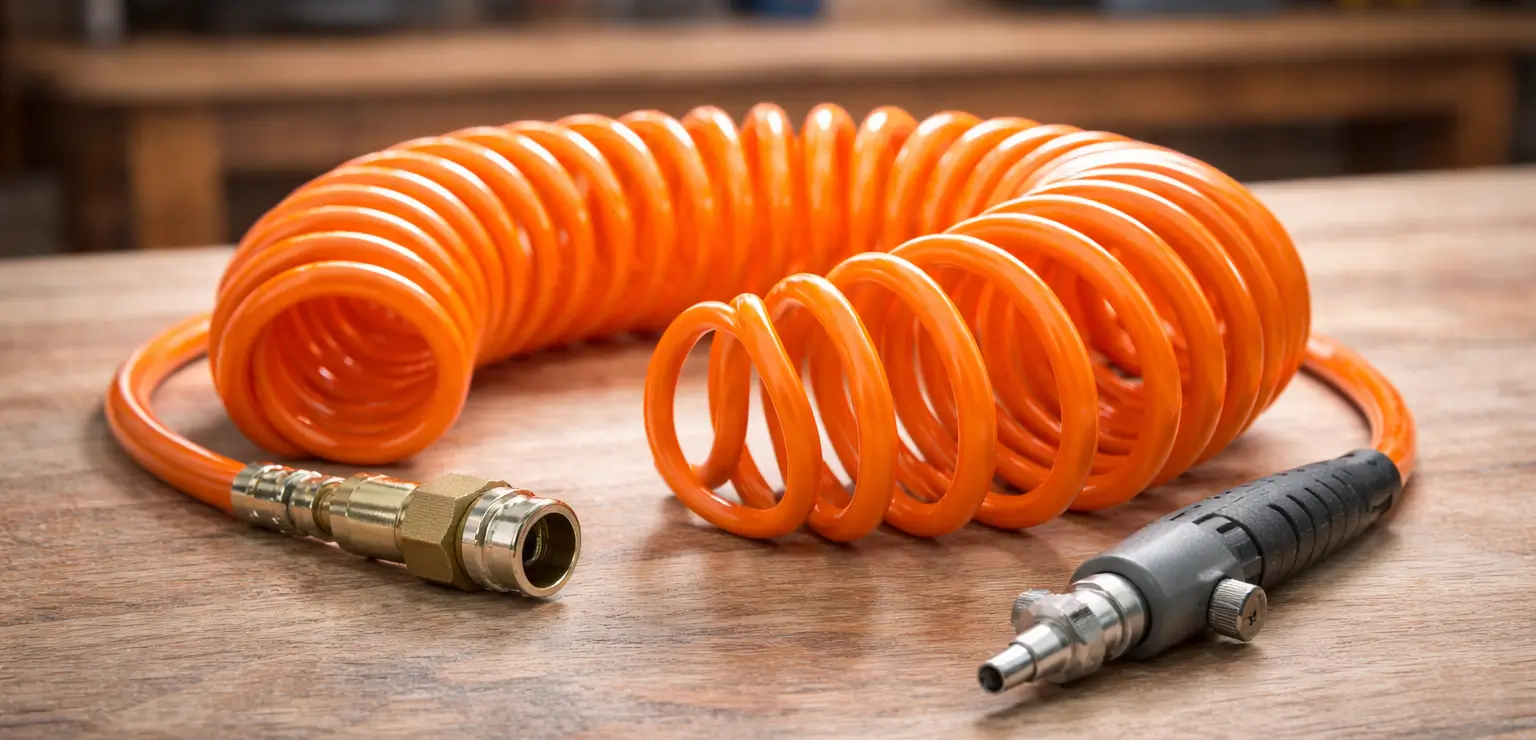
If you’re trying to find the best air compressor hose, focus on three things: size, length, and material.
- 3/8″ hose → best all-around choice for most garage setups
- 1/4″ hose → fine for light tools and portability
- 50 ft length → good balance between reach and performance
- Hybrid or rubber hose → easiest to use in real conditions
If you’re unsure, a 3/8″ hybrid hose around 50 ft is the safest starting point. Most problems people experience come from choosing the wrong size, not the wrong brand.
Example options (Amazon US):
- Hybrid: Flexzilla 3/8″ x 50 ft Air Hose
- Rubber: Goodyear 3/8″ Rubber Air Hose
- Lightweight: California Air Tools Polyurethane Hose
What “Best Air Compressor Hose” Actually Means
People search for the best air compressor hose expecting a product recommendation.
But hoses don’t work like that.
The performance of a hose depends on how it fits your setup. A hose that works perfectly for inflating tires can cause noticeable performance loss when running air tools or spraying.
The better question is:
What hose size, length, and material will work properly with your compressor and tools?
Once you understand that, the decision becomes straightforward.
Key Factors That Affect Air Compressor Hose Performance
There are only a few factors that truly affect how a hose performs. Everything else is secondary.
Hose Size and Airflow Performance
This is where most people go wrong.
The internal diameter of the hose determines how much air can flow through it. A smaller hose restricts airflow, and that restriction becomes noticeable when tools need continuous air.
In real use, this doesn’t show up immediately. You start using a tool, everything feels fine, then performance drops. The tool feels weaker, slower, and less consistent.
That’s not always the compressor.
Often, it’s the hose.
Hose Length and Pressure Drop
A long air compressor hose gives you reach, but it also introduces pressure drop.
The longer the hose:
- the more resistance
- the more airflow loss
- the more noticeable the drop under continuous use
This becomes important when you’re working far from the compressor or using tools that draw a lot of air.
Hose Material and Usability
Material doesn’t change airflow much, but it changes how the hose behaves.
This affects:
- flexibility
- kinking
- durability
- ease of handling
A stiff hose can make even a good setup frustrating to use.
Fittings and Connection Quality
This is often overlooked.
Even with the right hose, poor fittings can:
- restrict airflow
- leak air
- reduce performance
Sometimes the weakest point in the system isn’t the hose itself, but what’s attached to it.
Air Compressor Hose Size Guide (1/4″ vs 3/8″ vs 1/2″)
This is the most important part—and also the most misunderstood.
1/4 Inch Hose: When It Works
This is the most common size in smaller setups.
It works well for:
- inflating tires
- blowing dust
- nail guns
But under continuous use, it becomes restrictive.
You may notice:
- tools starting strong, then weakening
- pressure dropping mid-use
- more frequent compressor cycling
3/8 Inch Hose: Best All-Around Choice
This is what most people should be using.
It allows more airflow, which means:
- better tool performance
- more stable pressure
- less restriction
If you’re using impact tools, spray guns, or anything that runs continuously, this is usually the best size hose for air compressor setups.
1/2 Inch Hose: When You Actually Need It
This is typically used in more demanding setups.
It’s useful when:
- airflow demand is high
- longer hose runs are needed
For most home garages, it’s more than necessary.
What This Difference Feels Like in Real Use
The difference between 1/4″ and 3/8″ isn’t theoretical.
With a smaller hose, tools can feel inconsistent. You might not notice it immediately, but over a longer pass or sustained use, performance drops.
With a larger hose, everything feels more stable. The tool maintains power, and the system doesn’t feel like it’s struggling.
How Hose Length Affects Performance
A long air compressor hose seems convenient.
And it is—until it starts affecting performance.
Every extra foot adds resistance. Over short distances, this isn’t noticeable. Over longer runs, it becomes more obvious.
A 25 ft hose will feel more responsive than a 100 ft hose, especially with higher-demand tools.
That doesn’t mean you should always go short. It means you should balance reach with performance.
In many cases, a 50 ft hose is the practical middle ground.
If you need more reach, it’s often better to:
- move the compressor closer
- or increase hose diameter
instead of just adding more length.
Air Compressor Hose Materials Compared
Material doesn’t change airflow, but it changes usability.
PVC Hoses
These are usually the cheapest.
They tend to:
- become stiff in cold weather
- kink easily
- feel less durable
They work for light use, but not ideal for regular work.
Rubber Hoses
More durable and flexible.
They:
- handle temperature changes better
- resist kinking
- feel more stable
They are heavier, but easier to work with.
Hybrid Hoses
A mix between rubber and PVC.
They:
- stay flexible
- resist kinks
- are lighter than rubber
For most users, this is the best balance.
Polyurethane Hoses
Very lightweight and flexible.
They’re great for portability, but can be:
- less durable
- more prone to damage in rough environments
Best suited for lighter setups.
Common Mistakes When Choosing an Air Compressor Hose
A few patterns come up repeatedly.
One is choosing a hose based only on price. Cheaper hoses often create more problems than they solve.
Another is ignoring hose size. People assume the compressor is the limiting factor, when the hose is actually restricting airflow.
There’s also the tendency to go as long as possible without thinking about performance. A longer hose feels convenient until tools start losing power.
Most of these issues come down to one thing: the hose not matching the demand of the setup
Real-World Use Cases: What Hose You Actually Need
This is where the decision becomes clear.
Light, Occasional Use
If you’re inflating tires or using basic tools, a smaller hose works fine.
A 1/4″ hose is easy to manage and does the job.
General Garage Use
This is where most people fall.
A 3/8″ hose around 50 ft gives you:
- enough airflow
- enough reach
- consistent performance
This is the safest choice.
Tool-Heavy or Automotive Work
If you’re using impact tools or anything that runs continuously, airflow becomes critical.
A 3/8″ or larger hose is necessary.
Long-Distance Setups
If you need a long hose, increasing diameter helps offset pressure loss.
A longer 3/8″ hose performs better than a long 1/4″ hose.
Recommended Air Compressor Hose Options
You don’t need to overthink brands, but some options consistently perform well.
- Flexzilla Hybrid Hose → best overall balance (flexible, durable, easy to handle)
- Goodyear Rubber Hose → best for durability and heavy use
- California Air Tools Poly Hose → best for lightweight portability
The key is matching type to your usage, not just picking a brand.
What You Should Actually Choose
If you want a simple answer:
- Light use → 1/4″ hose
- Most garage setups → 3/8″ hose
- High demand or long runs → larger diameter
If you’re unsure, choose 3/8″.
It avoids most of the problems people run into.
Final Thoughts
Choosing the best air compressor hose isn’t about finding the highest-rated option.
It’s about matching size, length, and material to your actual use.
When those line up, everything works the way it should. Tools feel consistent, airflow stays stable, and the system doesn’t fight you.
Most issues people experience aren’t caused by the compressor or the tool.
They’re caused by the hose in between.