
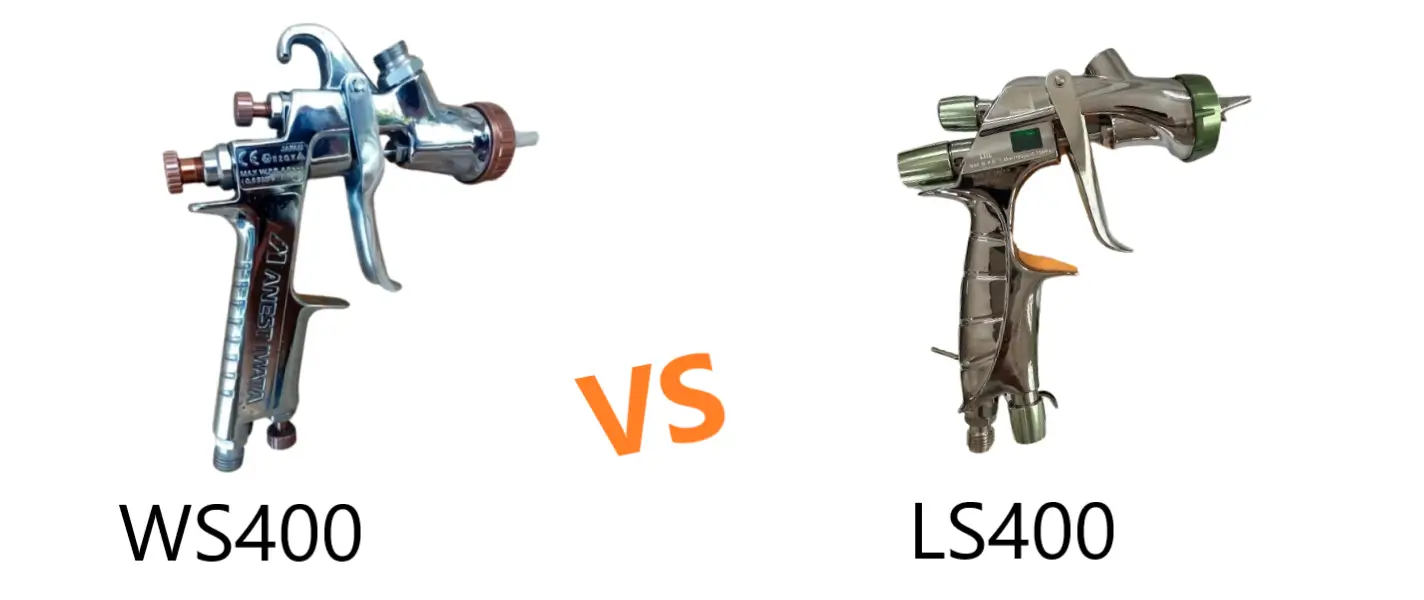
Key Takeaways
- The Iwata WS400 is the better choice for clearcoat when finish quality and leveling are most important.
- The Iwata LS400 is more versatile and easier to control, making it the safer choice for basecoat and daily work.
- If you can only choose one, the LS400 covers more use cases, but the WS400 delivers a higher-end final finish.
If you’re comparing the Iwata WS400 vs LS400, you’re likely trying to avoid wasting money on the wrong tool. These spray guns are expensive, and the wrong choice can lead to uneven metallics, excessive polishing, or inconsistent results across panels. The WS400 focuses on atomization quality and finish refinement, while the LS400 is built for stability, efficiency, and predictable results. The decision comes down to whether you value peak finish quality or overall usability.
Iwata WS400 Supernova – Quick Overview
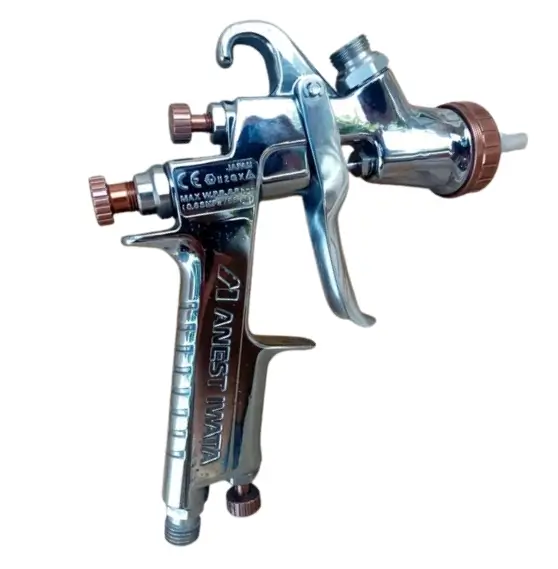
The Iwata WS400 is built around maximizing atomization quality, making it a clearcoat-focused spray gun.
It comes from the Supernova platform and is engineered to produce extremely fine droplets that level out smoothly on the surface. This results in a cleaner finish with less orange peel, but only if the painter maintains proper technique. It is less forgiving than other guns, which means mistakes in distance or overlap show quickly. If you are interested how this compares to DV1, check out the Iwata WS400 vs DeVilbiss DV1 comparison.
It comes in several variations, including WS400 Series 2 and multiple air cap configurations.
Iwata LS400 Supernova – Quick Overview
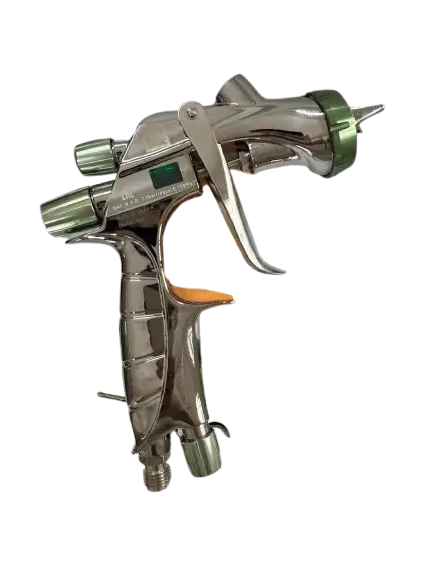
The Iwata LS400 is designed as a balanced, all-purpose spray gun that prioritizes consistency and ease of use.
It is widely preferred for basecoat because it distributes material evenly without requiring perfect technique. This makes it easier to avoid striping and patchy metallics, especially on larger panels. It trades a small amount of finish refinement for stability and speed, which is often more valuable in real shop conditions.
It is available in multiple setups, including LS400 ETS and Entech variants.
Iwata WS400 vs LS400 – Comparison
|
Factor |
WS400 |
LS400 |
|
Primary Use |
Clearcoat |
Basecoat / versatile use |
|
Atomization |
Extremely fine |
Fine but slightly heavier |
|
Finish Quality |
Exceptional (glass-like) |
Very good |
|
Ease of Use |
More demanding |
More forgiving |
|
Transfer Efficiency |
High |
Very high |
|
Material Consumption |
Slightly higher |
More efficient |
|
Speed of Application |
Moderate |
Faster coverage |
|
Control |
Precision-focused |
Balanced control |
|
Air Consumption |
Moderate-high |
Moderate |
|
Learning Curve |
Steeper |
Easier |
|
Consistency Across Jobs |
High if dialed in |
Very consistent overall |
|
Best For |
Final finish perfection |
Daily shop work |
How They Feel in Use
The WS400 feels precise but unforgiving. It responds directly to your technique, which means small mistakes in speed or distance can lead to uneven clear or texture issues. However, when used correctly, it produces a noticeably smoother finish that requires less correction afterward. This is where it stands out in high-end work.
The LS400 feels more stable and easier to control. It allows you to move faster without risking uneven coverage, which is especially important for basecoat. Metallics lay down more evenly, and the gun is less sensitive to small inconsistencies in your technique. In practice, this reduces rework and speeds up the job.
The difference becomes clear over multiple panels. The WS400 rewards precision, while the LS400 reduces the chance of mistakes.
WS400 Technical Details
- Spray technology: Split nozzle (Supernova concept)
- Typical nozzle sizes: 1.3 / 1.4 mm
- Air consumption: Approx. 370–420 L/min
- Recommended pressure: Around 1.8–2.0 bar
- Fan pattern: Wide and very uniform
- Atomization: Ultra-fine droplets
- Weight: Lightweight aluminum body
- Cup compatibility: Standard gravity feed
- Best suited materials: Clearcoat, high-solids finishes
LS400 Technical Details
- Spray technology: LV technology with the Entech system
- Typical nozzle sizes: 1.3 / 1.4 mm
- Air consumption: Approx. 300–350 L/min
- Recommended pressure: Around 1.6–1.8 bar
- Fan pattern: Wide, slightly softer edges
- Atomization: Fine, slightly heavier than WS400
- Weight: Lightweight ergonomic body
- Cup compatibility: Standard gravity feed
- Best-suited materials: Basecoat, general-purpose coatings
Choosing Between the Two
If your priority is clearcoat, the WS400 is the stronger option. Its finer atomization allows the clear to level more evenly, which reduces texture and minimizes the amount of polishing needed afterward. This becomes especially important on darker colors or high-end finishes, where imperfections are more visible.
For basecoat, the LS400 is the better choice. It delivers more consistent coverage and is less sensitive to technique, which helps prevent striping and uneven metallic distribution. It also allows faster application, which matters in both production environments and larger jobs.
For the sealer, both guns can work, but the LS400 is generally more practical. Its forgiving nature makes it easier to apply even layers without overthinking the setup. Neither gun is ideal for primer surfacer, as they are designed for finishing stages rather than heavy material application.
If you can only choose one, the LS400 offers more flexibility and fewer risks. The WS400, however, is the better tool when finish quality is the top priority and technique is not a limiting factor.
Final Words
The choice between the Iwata Supernova WS400 and LS400 is not about which spray gun is better overall. It is about what kind of work you do and how you work.
The WS400 is built for painters who want maximum finish quality and are comfortable working with a more sensitive tool. The LS400 is built for consistency, efficiency, and predictable results across different jobs.
If your goal is the best possible final finish, the WS400 delivers. If your goal is reliable performance across most applications, the LS400 is the more practical choice.
FAQ
Is the WS400 only for clearcoat?
No. It can be used for basecoat, but it is slower and less forgiving compared to the LS400.
Is the LS400 good for clearcoat?
Yes, but it will not produce the same level of finish refinement as the WS400.
Which one is better for beginners?
The LS400 is easier to control and more forgiving, making it better for less experienced users.
Do they use the same air pressure?
They are similar, but the WS400 typically operates at slightly higher pressure depending on the setup.
Can one gun replace the other?
The LS400 can handle more scenarios, but it cannot fully replace the WS400 when high-end clearcoat finish quality is required.